
Living in East Africa today is not unlike a British 1950’s middle class existence for many expatriates. A comfortable three or four bedroom house with a large garden and full compliment of staff is the norm. Rather than taking expensive skiing holidays and trips to the Med, we find that driving out into the bush in our own 4x4 provides scenery and glamour enough. Monthly salaries are spent on house staff and maintaining a comfortable way of life. Some of the worlds most beautiful beaches are on our doorstep (well, an eight hour drive perhaps) and renting a self catering cottage in some remote part with cook and cleaning staff in situ can be the perfect holiday. Spotting wild animals roaming around the garden is an added bonus. We are privileged to live here.
Mothers and wives often must necessarily stay at home for work permits are generally only granted to one half of a couple. For each to have a permit is considered excessive unless you are both qualified professionals whose skills cannot be sourced locally, or you are involved in some kind of training program. As a result, husbands return home from work after an arduous day at the office after a ‘not too bad’ twenty five minute commute, to be welcomed into a spotless house, children freshly bathed, hot meal in the oven and relaxed wife proffering a gin and tonic. Finding a baby sitter is never a problem. Book clubs, golf and bridge circles can always be sought out. The local shop will give you credit and there is always someone to help carry your bags for a few shillings.
There is an element of ‘make do and mend’ as shopping is basic and you soon learn to make the best of what is available. ‘Safari Style’ consists of grass mats, sheepskins, locally made hardwood furniture, cow horns and soft furnishings made from fabrics sourced at the second hand markets. A farmer’s wife I met recently said that when she first arrived in a remote rural district, she was only able to visit the local town five times a year and her container from Germany did not arrive for six months. They started with not a stick of furniture and she had a post war cook book which suggested substitutions for rationed ingredients, which was helpful when all that she could cook was what was possible to grow or rear. Cows are still milked by hand and farm machinery is often circa 1950.
When I got married and moved to Africa for the first time two days later, I was pretty unprepared for the fact that in doing so I was losing my independence, just like those new 50s British brides must have felt when they gave up their single status. I had no car, no job, no friends and no family close by, no money except for what my husband earned and in addition I didn’t understand the local language. On arrival I became ‘Mrs X’ and there was very little more to say about it as my former life was pretty irrelevant. However, it had its benefits too; moving to Africa fast tracked my husband and I from renting a tiny flat in London to living comfortably in a three bedroom house with a four wheel drive, sizeable garden, a dog and reliable house help within one year.
I realised before long that, as an accompanying ‘spouse’ or ‘dependant’ on an expatriate contract, opportunities for furthering my career would prove to be difficult. Without a medical or teaching background, my degree in History of Art had not stood me in good stead for the rigours of the developing world. Finding friends and figuring out what to do with my time was tricky. Exploring craft markets, making curtains, sketching and rearing an Alsatian puppy just weren’t quite enough. After a short spell of working at the British high Commission as local hire staff, I quickly decided that producing a baby was the best way forward. After having a child, I soon met new friends with equal amounts time on their hands. We now have three children who enjoy the attentions of two parents, two wonderful nannies and two friendly gardeners. There is always an adult who has the time to stop and talk or listen to an inquisitive child. When popping out to play dates or shopping trips we can choose to leave the baby at home to sleep. In shops and restaurants, children are welcomed with open arms. When off on holidays, we know that we can leave our home empty but in safe hands.
There is a social responsibility that comes with employing staff. The common perception is that expatriates live a high life and their local contribution is negligible but employing staff you are giving a number of people a livelihood when jobs are scarce. The average person in full time employment will be supporting up to twelve family and extended family members who are often living up country. The learning curve is steep when managing pay rolls, pay rises, helping out with medical bills, providing loans for school fees and stumping up when unexpected family funeral costs need to be met. Calculating overtime and holiday pay can be bewildering. Buying monthly supplies of sugar, tea and soap for staff can be a chore. Finding a position for a friend’s ayah’s sister is the sort of thing that we 1950s housewives do.
As in post war Britain, we occasionally suffer from shortages. Water dries up, power is cut off and telephone lines go down in heavy rain. Sometimes there is no sugar in the shops, or a fuel shortage and we are madly searching for a place to fill up our cars. The postal system is erratic and unreliable. Wood fired ‘kuni boosters’ are used to heat water, and small electric pumps push water from ground storage tanks into roof tanks. Many houses have a small diesel fuelled generator to keep the fridge going during lengthy power outages and to provide lighting at night time. Instead of open plan kitchens and mod cons, we still have poky, dark and poorly designed 1950s or even 1930s style kitchens. Threatened security and armed burglaries are a common concern and topic of conversation. Not just for the expatriates, but for the local community. The new Kenyan professional middle classes are being particularly hard hit especially when they cannot afford security firms and electric fences.
In this small community you will find news travels fast. Without the support of extended family; friends rally around in times of trouble. If someone is ill in hospital there will be hundreds of offers to help out with the school run. When a new baby is born there will be bunches of flowers dropped off at the gate along with a fresh baked cake or lasagne and offers of practical help. Nothing can be kept a secret either, so don’t expect to keep it to yourself if a marriage is breaking up or if you ignominiously lose your job.
Overall, life is good for the expat housewife in East Africa. Many are involved in charity work and contribute to fund raising initiatives. The Government may be in turmoil but the people you meet and live among are open, friendly and interesting. We cherish our annual trips home to catch up with relatives and friends, but we don’t envy them their housework, cooking and lack of time for themselves. For a young family growing up, this is the place to be.
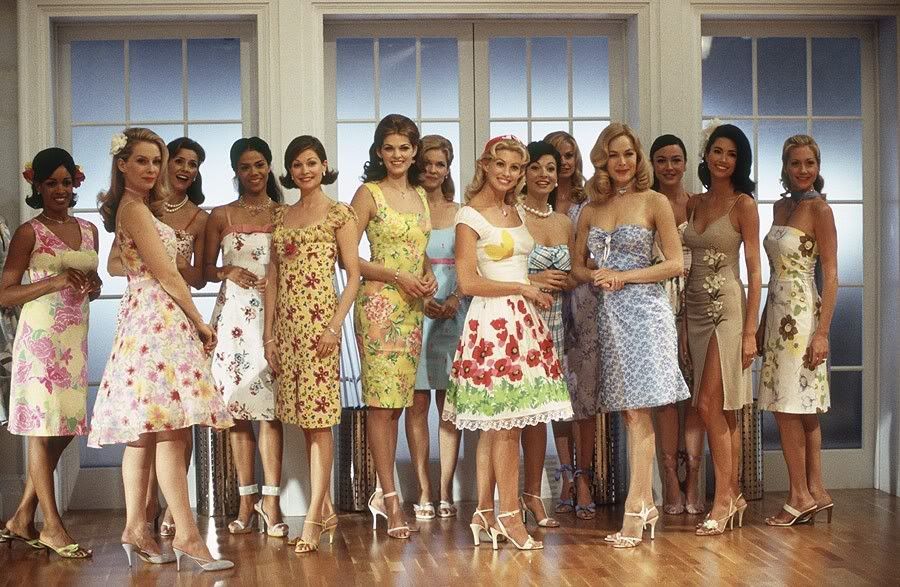
Mothers and wives often must necessarily stay at home for work permits are generally only granted to one half of a couple. For each to have a permit is considered excessive unless you are both qualified professionals whose skills cannot be sourced locally, or you are involved in some kind of training program. As a result, husbands return home from work after an arduous day at the office after a ‘not too bad’ twenty five minute commute, to be welcomed into a spotless house, children freshly bathed, hot meal in the oven and relaxed wife proffering a gin and tonic. Finding a baby sitter is never a problem. Book clubs, golf and bridge circles can always be sought out. The local shop will give you credit and there is always someone to help carry your bags for a few shillings.
There is an element of ‘make do and mend’ as shopping is basic and you soon learn to make the best of what is available. ‘Safari Style’ consists of grass mats, sheepskins, locally made hardwood furniture, cow horns and soft furnishings made from fabrics sourced at the second hand markets. A farmer’s wife I met recently said that when she first arrived in a remote rural district, she was only able to visit the local town five times a year and her container from Germany did not arrive for six months. They started with not a stick of furniture and she had a post war cook book which suggested substitutions for rationed ingredients, which was helpful when all that she could cook was what was possible to grow or rear. Cows are still milked by hand and farm machinery is often circa 1950.
When I got married and moved to Africa for the first time two days later, I was pretty unprepared for the fact that in doing so I was losing my independence, just like those new 50s British brides must have felt when they gave up their single status. I had no car, no job, no friends and no family close by, no money except for what my husband earned and in addition I didn’t understand the local language. On arrival I became ‘Mrs X’ and there was very little more to say about it as my former life was pretty irrelevant. However, it had its benefits too; moving to Africa fast tracked my husband and I from renting a tiny flat in London to living comfortably in a three bedroom house with a four wheel drive, sizeable garden, a dog and reliable house help within one year.
I realised before long that, as an accompanying ‘spouse’ or ‘dependant’ on an expatriate contract, opportunities for furthering my career would prove to be difficult. Without a medical or teaching background, my degree in History of Art had not stood me in good stead for the rigours of the developing world. Finding friends and figuring out what to do with my time was tricky. Exploring craft markets, making curtains, sketching and rearing an Alsatian puppy just weren’t quite enough. After a short spell of working at the British high Commission as local hire staff, I quickly decided that producing a baby was the best way forward. After having a child, I soon met new friends with equal amounts time on their hands. We now have three children who enjoy the attentions of two parents, two wonderful nannies and two friendly gardeners. There is always an adult who has the time to stop and talk or listen to an inquisitive child. When popping out to play dates or shopping trips we can choose to leave the baby at home to sleep. In shops and restaurants, children are welcomed with open arms. When off on holidays, we know that we can leave our home empty but in safe hands.
There is a social responsibility that comes with employing staff. The common perception is that expatriates live a high life and their local contribution is negligible but employing staff you are giving a number of people a livelihood when jobs are scarce. The average person in full time employment will be supporting up to twelve family and extended family members who are often living up country. The learning curve is steep when managing pay rolls, pay rises, helping out with medical bills, providing loans for school fees and stumping up when unexpected family funeral costs need to be met. Calculating overtime and holiday pay can be bewildering. Buying monthly supplies of sugar, tea and soap for staff can be a chore. Finding a position for a friend’s ayah’s sister is the sort of thing that we 1950s housewives do.
As in post war Britain, we occasionally suffer from shortages. Water dries up, power is cut off and telephone lines go down in heavy rain. Sometimes there is no sugar in the shops, or a fuel shortage and we are madly searching for a place to fill up our cars. The postal system is erratic and unreliable. Wood fired ‘kuni boosters’ are used to heat water, and small electric pumps push water from ground storage tanks into roof tanks. Many houses have a small diesel fuelled generator to keep the fridge going during lengthy power outages and to provide lighting at night time. Instead of open plan kitchens and mod cons, we still have poky, dark and poorly designed 1950s or even 1930s style kitchens. Threatened security and armed burglaries are a common concern and topic of conversation. Not just for the expatriates, but for the local community. The new Kenyan professional middle classes are being particularly hard hit especially when they cannot afford security firms and electric fences.
In this small community you will find news travels fast. Without the support of extended family; friends rally around in times of trouble. If someone is ill in hospital there will be hundreds of offers to help out with the school run. When a new baby is born there will be bunches of flowers dropped off at the gate along with a fresh baked cake or lasagne and offers of practical help. Nothing can be kept a secret either, so don’t expect to keep it to yourself if a marriage is breaking up or if you ignominiously lose your job.
Overall, life is good for the expat housewife in East Africa. Many are involved in charity work and contribute to fund raising initiatives. The Government may be in turmoil but the people you meet and live among are open, friendly and interesting. We cherish our annual trips home to catch up with relatives and friends, but we don’t envy them their housework, cooking and lack of time for themselves. For a young family growing up, this is the place to be.
11 comments:
What a great post. You sum up life in Kenya so well. Growing up there was idilyic and I wouldn't have swapped it for the world. Even now, living in the UK, I still yearn for being out there and having that element of care-free which defines life out there. I don't miss the gossip, the small-mindedness and the excitment over new people joining the group though!
Hope all is well.
Thanks for your comment - I have been enjoying your blog. Forgive me for not having created a link, I will but have not yet got the hang of how to do it. Durrr...
What age were you when you moved back to the UK? Where do you feel you now truly belong? Both places? I wonder how our kids will feel and if/when we will go back 'home'.
Glad you are still reading!
Great post! Makes me want to pack it up and move there now .... you forgot to mention the cold winters (elsewhere) are now something you hear about from friends in the northern regions, NOT in equatorial Africa ... no worries of cold weather, TRUE cold weather not 15 C ;) , how about -15 C and 35 cm of snow ACK!
Someday we will be there again ...
Tracy
Rather idyllic -true. But as a fellow expat here myself, what you've missed is the constant security threat (perhaps you don't feel it in the peoples republic of karen), the fact that domestic staff are almost as much work as any time they save you (how many times have I heard, 'Madam, I have a problem'?) . As a young wife who came out here recently in similar circumstances, no one prepares you to have to be your staffs sugar-daddy, social work and microfinance corporation all at once. You shouldn't have to shoulder all of that, and you shouldn't have to deal with it just to get your bathroom cleaned everyday.
Not to mention the the 'dudus' and the lizard poo if you're squeemish like me.
You sound like a kind sort, but the majority of mzungus here treat their staff terribly in terms of their attitude towards them. Some try to make it up by showering cash/goods on them, but the relationship is transactional nothing more. Apart from the diehard KCs who are stuck here and really can't afford to go back to the UK (house prices etc), most expats are pretty pleased to leave after their time is up.
10 months and counting...
But I still love the blog!
First, congratulations on a well written account of expat spouses' life in Kenya. I agree with both Africa expat spouse and anonymous in their summation of life in this country.
I lived in Kenya as an accompanying spouse for 2 1/2 years in the beginning of 2003 until late 2005 and have never slept less in my life because of the 'nairobbery' situation. I miss on the otherhand, the elegance, timelessness, raw beauty and adventure that I've come to associate with Kenya.
Although we consider ourselves lucky to have finished that assignment unscathed (we know many who didn't), we wouldn't mind going back in the future when things are more settled.
Regardless, Kenya is still one of the more memorable posts we've had and we wear it like a badge.
Very interesting blog.its refreshingly different.It gives a different perspective of the reclusive expats in Kenya.Its funny how little is known about expats apart from the little covered in the press (usually bad news).I think you will find the negative comments have something to do with this.But i must say i had to laugh at the lady who accused you of taking sides with Mungiki and later introduced herself that was hilarious!-
Enjoy Kenya and Kenyans we are a unique people
I just stumbled across your blog and am really enjoying it. My husband goes over to Kenya three or four times a year in his work for a charitable organization that takes relief into Darfur (they have a compound just across the border from Loki).
We have considered moving our entire family over to Kenya for a longer term, but after the post-election violence, we were told it wouldn't be wise to go over. Now that things have settled back down, we're thinking again about heading over there.
I grew up traveling around the world with my family (late father was an aviation historian), so living abroad has a big appeal to me. I'm used to eating strange things and dealing with odd forms of transportation. I just haven't read about anyone living in Kenya and raising children, so this blog is very encouraging. I've got you bookmarked!
Can I ask which part of Nairobi you live in? My husband has stayed in Karen, which seems to be a relatively safe area for families.
Hello All- I have just stumbled on this blog after typing "Kenya in the 1950's" we lived there from 1953-1958 I was age 5 to age 10.
My father was a young US consulate officer and we lived Muthaiga in a beautiful spanish style home.
My parents were very young and beautiful but the threat of the Mau Mau was very real to them, I remember many black-outs at the norfolk hotel[where we stayed for a month or so]. when my parents had their revolvers close nearby.
Our servants quarters in Muthaiga were searched periodically for Mau Mau.
Eventually I was enrollled at Loretta Convent and was a day and boarding student.
Our family spent many hours in Nairobi game park, Amboseli and Tsavo.
We also spent time in Kima where our friends ran a sisal plantation.
Most of all I remember or bi-yearly trips to Mombasa to stay at the Nyali Beach hotel for a month or so.
I'll never forget hearing the bridge underneath us crossing over to Mombasa after 2 days travelling from Nairobi in our wood-paneled Chevy station wagon,
which was the first US station wagon in East Africa.
Life was beautiful to all of us children.We swam at the "Parklands" ever day and enjoyed life in general.
Another first, was that we had one of the first movie cameras, and luckily my parents took tons of footage so we have many memories, so much so, that the line is blurred between what one really remembered, and what one saw. on the screen many years later, as our family grew up and reminiced.,
Hello everybody,
Just wondering if somebody could advise on living in Kenya in a nutshell:
Cost of living (accommodation (house/flat), kids education (seems very expensive), fuel cost, doctors and dentists, health insurance), security, traveling within a country, quality of health care, flights frequency from/to EU.
Please recommend schools and areas to live around Nairobi.
Any information is greatly appreciated.
Many thanks
Victor
vicpro@rocketmail.com
I'm currently writing a novel set in 1950s Nairobi, so am very interested to read comments on your blog of other people's experiences of East Africa during that time. My own family lived there for ten years, leaving in 1960. My father worked as a hydraulics engineer, and my mother lived the typical expat life, raising four girls there. Sadly, she died last year. I'd love to hear from any other 50s expats and their experiences.
Hi, I've been enjoying your blog. As an expat baby born in Uganda then formative years in Kenya followed by a brief period in the Philippines, it took me a long time to explain to people that when my parent's returned to the UK with me, they came home but for me it was another new country to get used to. As a kid you have no other point of reference it's the norm. As an adult reading your blog it has reminded me of how big an impact my childhood in Africa had on me and the experiences I had were fundamental to who I am. I have particularly enjoyed your comments on the Kenya cowboys and girls. I was at school with many of those boys at a certain Happy Valley establishment. Prior to that I had been educated in Nairobi in what can only be described as a melting pot. It is the memories of those times that I hold particularly dear as though it was a privileged experience it did draw kids from a wide ethnic pool and would hope that Kenya can move on to develop it's resources, to provide opportunities for all it's "tribes".
Post a Comment